Thursday, November 27, 2014

The End of It All!

Well, I wanted to talk about something cheerful this time around, so how about the apocalypse?

I’m constantly fascinated by society’s interest in the End Times and dystopian futures, especially when it comes to literature and media. One would think that folks would be more interested in blissful escapism than delving into the dangerous realms of ‘what-if’ scenarios for when the world ends. However, an argument could be made that viewing such things in fiction IS escapism, as it gives us a safe place to speculate and observe the ultimate ends of concerns that we all might have about the world.

Plus, it’s a great way to see really cool-looking mutants!

Beast is WAY cooler anyways.

Er... Not that kind...

In all honesty, fascination with the end of the world or the fall of society is not new in the slightest. Mankind has long held an interest in the afterlife, dark prophecies of the future, and essentially with death and decay. It comes from that natural question a healthy inquisitive mind has: “What’s next?”

What DOES seem to be a little new to me is the number of works featuring anthropomorphic characters in these settings. I’ve seen a couple of books and games that depict a ruined Earth where humankind has almost entirely died out and, in their place, other animals became the dominant species, developing culture, language, technology, and so forth. It’s an interesting idea because it almost presents anthropomorphic animals as a logical and sensible thing. Some species has to fill the gap that man has left behind, right?

I do find it kind of amusing that, oftentimes, these newly dominant species end up becoming extremely human in appearance and mannerisms as well. One might think that’s a commentary on how sentient beings and society tend to operate in an immutable pattern, but I’m sure it’s also done because of the ease of relatability for readers, and because it’s simply a fun idea for the writers.

But, going back to what I said earlier, these settings are also fun because they allow the writer to play with mutants, or hybrids, as some might see them. In terms of anthropomorphic animals, the sky is nearly the limit here, with winged cats and talking, blood-red dogs being the more tame varieties. I’ve seen four-foot tall anthropomorphic mice with antennae for ears, king-sized slugs with crowns to match, and cheetah with the legs of a grasshopper. These mutations allow for all sorts of new ideas for how characters can move and perceive the world, and they can be extremely exciting for that reason alone. I think the most fun this line of writing gets is when it just fully embraces its weirdness.


Perhaps one of the best examples of this I’ve seen in writing is a Dungeons and Dragons novel called ‘Red Sails in the Fallout’. It is part of a series of novels written about the DnD setting known as Gamma World, and few things get stranger than that. For those of you who do not know, the Gamma World setting is a game type that is characterized primarily by its randomness and anything-goes mentality. It’s essentially a setting where the world has gone to pot and mutations are everywhere, both in the monsters and the player characters and even the world itself. As an example of how silly and awesome the game can get, a friend of mine once played a session where they were assigned and acquired random mutations as the game went on. By the end of the game, he was a swarm of sentient bees that all operated with one consciousness and had telepathic powers along with shooting laser beams out of his many eyes.

I’m told he was one of the more normal cases in his game.

The book is a fine read even for those who have never played a single game of Dungeons and Dragons. I won’t do a proper Book Talk on this one as I did not read it critically and it’s been a long time since I picked it up, but it has some of the marks of what I described above, where the main anthropomorphic characters travel across a radiation drenched world, fending off mutated creatures and the land itself and dealing with the understandably crazy inhabitants and their own mutations as they come. It has a very tongue-in-cheek flavor to its writing as it knows full well how weird the setting is, and is definitely written for the purposes of entertainment over science.

So, yeah, when it comes to the apocalypse and those terrifying dystopian futures, I think they’re all well and good to explore and give us some great insights into human culture. However, I also love how they’re great starting points for looking at how the world could be different if given half a chance and a nuclear fallout or two.

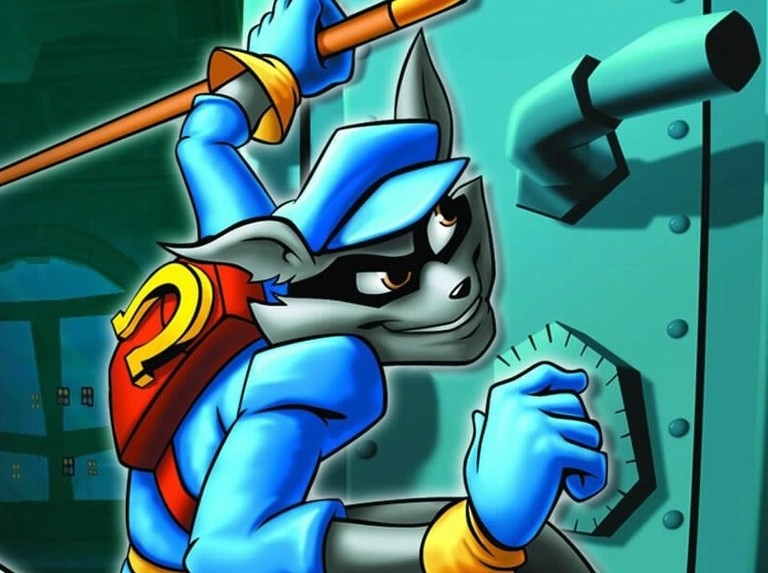
Though I do wonder which animals really would rise to dominance after the humans have gone… I want to say it would be raccoons, with our dexterous hands and intelligence, but the end of human society means we would lose one of our primary food sources!

I see you there, Mr. Artist!
Don't you dare give me six arms or nine tails...
I'm already mutant enough, being blue.

Speaking of food, I hope everyone has a wonderful Thanksgiving, if you celebrate it. I am extremely thankful for a great many things, including the folks who've read my words here and shared their opinion and thoughts with me as a result.

Until next time, happy reading all!

Currently Reading:

The Last Wild by Piers Torday

Monday, November 17, 2014

Impartiality

This might be a bit rambly and a touch personal, so I do apologize in advance.

Here we go...


A little while back, a good friend of mine asked a question about my own personal writing that I thought I was prepared for:

“Why ARE your characters anthropomorphic animals instead of humans?”

Really, it’s an extremely fair question that many writers of anthropomorphic animal fiction have no doubt run into. I’ve seen it posted up on webcomic and author FAQs at least several times. Yet somehow, that day, it tripped me up a little more than I was expecting. My knee-jerk response was probably the one that was the most true, as I responded “Well, my characters are animals because that’s what they are.”

It’s a bit circular in logic, but I feel it is true enough. Why are any characters in some novels human? Their species doesn’t have to be their primary identity, right? Honestly, I feel some old-fashioned fantasy fiction is kind of mocked for having Dwarves always ‘act like Dwarves’ and Elves always ‘acting like Elves’. Typically the characters that break from the molds created for their races are celebrated and memorable. Why else does the culturally unheard of friendship of Gimli and Legolas feel so strong and honest by the end of the Lord of the Rings trilogy?

Of course, me being the type of fellow that I am, I couldn’t just let such a simple statement be the end of my answer to my friend’s question. I actually quickly backed up on my statement and tried to make a more solid and professional one that took on a different angle. My response was something of a mix of an answer I’d heard before from an author I can’t quite recall at the moment:

“My characters are animals so as to bypass racial stereotypes and to focus on how different types of people can get together despite their obvious differences. I can use my characters to make a statement about diversity and racism without calling out specific races and maybe make people think differently about the issues.”

Before some of the more cynical of my reader mutter “Yeah right…” on my somewhat canned statement, I actually feel there is a modicum of truth to what I said, though I wasn’t quite honest with my feelings on the matter and what really irks me about such a question sometimes.


I’m tired of race as being ‘a point’ in fiction.

After my answer, I was told a bit about how many publishers in the industry are looking for more diversity in literature, looking for stories about minority cultures and races that aren’t often represented in popular literature. While looking at publishers to contact for my own work, I actually saw something like this pop up several times where publishers were looking for works primarily focusing on ‘minority culture’ and a rather amusing statement I heard from that angle was ‘aliens don’t count as diverse cultures!’

It actually makes me a little angry that publishers and much of the media is clamoring for minority representation. This is not because I want women and people of color to continue to be under-represented and wrongfully stereotyped, but rather because I don’t think the people who publish and ask for this sort of focus really know what they’re asking for or how offensive it really is when they say they want something with a clear focus on ‘minority culture’.

When people are asking for stories about African Americans, they’re not really asking for stories about people who are black. They’re asking for stories about people who SHOW they’re black. They don’t want a black young black man named Jonathan Reed with a successful mother and father who live comfortably in upper-middle class America with dreams, problems, and ambitions of their own that have no bearing on their race. They want a story about a boy named Miles “Hoops” Jordan who struggles in a poverty-ridden neighborhood with his divorced mother as he fights to rise against the gang and drug culture and the ‘walls’ created by the color of his skin as he tries to prove what he can do.

I’m so tired of reading stories telling me that my race is the only major identity I have. Good at music, good at art, honors student, professional public speaker… all of these are subcategories that go under the heading of “He’s black, but…” and it seems to be all folks want to see when they want to read about ‘minority culture’. In fact, I remember a book called ‘Anansi Boys’ I read where the race of the character actually shocked me. He didn’t have a stereotypical ‘black’ name, he was successful and spoke well and never once was his race an ‘issue’. I only realized he was black when someone commented on his African heritage as it related to the mythology that was being referenced at various points in the story.

It actually shocked me that this well-spoken man I was reading about was black, and I feel like that’s a BAD thing. You know what’s also funny about it? Anansi Boys is not labelled in any fashion to suggest it’s primarily focused on characters of color, and yet I see publishers and readers looking for ‘black fiction’ and ‘minority fiction’ and putting lovely labels on them like ‘urban fiction’ and ‘urban romance’, just so folks don’t get confused about what they might pick up.

When I hear that publishers are looking for more ‘diversity’ in their books, I get the feeling they just want to pad out the ‘urban’ genre or the ‘women’s fiction’ genre. I do not get the feeling that they want to see new and interesting characters or strong, unique stories, but rather that they want stories they can put into their box in order to draw certain attention to themselves.

I don’t think that’s right to do to readers, and I feel like it’s poisoning our literary culture and culture in general. Rather than focusing on people, stories, and ideas, we’re focusing on covers and categories. We don’t need more stories about ‘black people’, we need more stories about ‘people, who also happen to be black.’

Of course, I don’t mean to undermine the wealth of wonderful literature about civil struggles. I feel they’re incredibly important, especially for historical purposes and showing the evils of society and how we can stand against them. In a way, such stories are fantastic accounts of what it really means to be ‘human’ in the fullest sense, and that’s really the idea that anthropomorphic literature was meant to bring into focus too. I’ve loved reading many stories about civil rights and I feel like they are still relevant and can be written about issues facing us today.

However, and bringing this back to the question that started this, I am tired of civil rights being the only place we see racial diversity.  I don’t write and draw stories about anthropomorphic animal characters in order to subvert or attack racial ideas.  I write about these characters because I love the worlds and ideas that they bring to the table, and also because I want to bring the focus away from the color of skin and towards who these people are as characters.

Yeah, folks may always associate raccoons with thievery and cats with wanting to take over the world, but I feel like, once readers see traits in these characters that they can identify with, they’ll more readily take to them and their stories and won’t be afraid of whether or not these characters are appropriately representing their race.


I do apologize if I went on a bit of ramble here, but I actually felt this was pretty relevant to the topics we’ve covered in this blog. Next week I’ll try to hop into something a bit more light-hearted, I promise!

For those who want a bit more 'cute' with their rant!
This is what I get for starting trouble...


Until then, happy reading, all!

-Chammy


Monday, November 10, 2014

Here Be Dragons

Dragons are interesting creatures when it comes to anthropomorphic fiction. Really, of all the anthro beasts available, dragons are perhaps one of the most common to see in fiction, even if those stories have no other talking animals outside of the dragon. They hold a ready spot in fantasy and fairy tales and are easily accepted as sages, monsters, and even sidekicks to the heroes. In rare instances, they even get to be heroes themselves! If anyone would like to see probably the best and most renowned book series with dragon characters, you don’t need to look any further than the “Dragonriders of Pern” series by Anne McAffrey.

However, and this may seem like an odd question, but: What exactly IS an anthropomorphic dragon?

I don’t think there’s any doubt that dragons are highly anthropomorphized. They’re known for telling riddles, hoarding treasure, and kidnapping beautiful women. Even at their most monstrous, dragons are still considered beasts under the domain of good or evil. It’s extremely rare for a dragon in literature to be treated like wild cattle, without any real rhyme or reason for what it does. With that in mind, though, there are also clearly different ‘levels’ of anthropomorphic dragons.

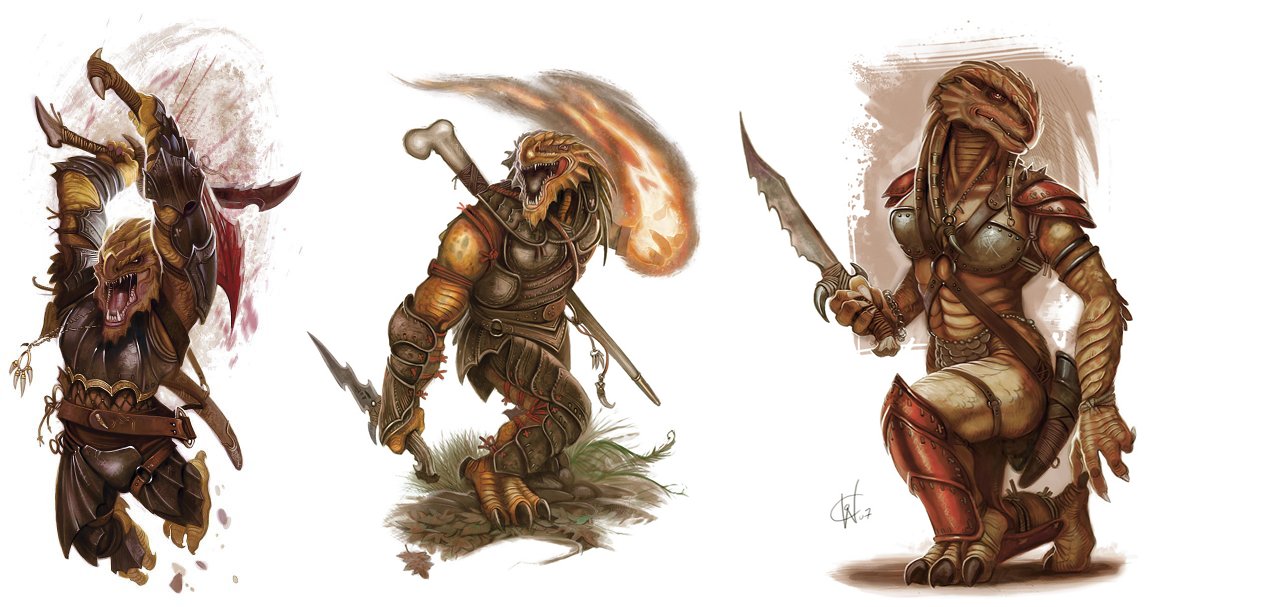
In recent years, the Dungeons and Dragons franchise has popularized a race called ‘Dragonborn’, who are basically wingless human-dragon hybrids. They look like the dragons in that universe, having scale patterns and most facial features to match, but they’re also still clearly human-like by standing upright and with plantigrade feet. They speak and move not unlike humans do and are regarded as odd in that universe, but not unheard of. Despite the name given, I think we could easily get away with calling this race an anthropomorphic dragon race.

Definitely an awesome race, but I wish they didn't always look so angry...


Then there are the more direct anthro dragons, seen less in every day literature and much more in proper furry literature. These dragons are essentially like D&D’s Dragonborn race, but they have wings, tails of varying lengths, and usually look a little less monstrous by design. Of course, they stand upright and have hands designed for manipulating objects, and their height varies. While these dragons ARE uncommon to see in everyday media, they’re still around in some places. One of my most favorite examples is Llewellyn, from the Ozy & Millie comic strip, and Lazarus, a dragon from SEGA’s Shining Wind series. When it comes to purely written and published works, however, I’m afraid I can’t think of any off the top of my head.

The real question here is: who's playing black?


When we look at these characters, I’m wondering, is it fair to call them ‘anthro’ dragons? Dragons are already plenty anthropomorphized in terms of speech and personality, and all these types of characters are adding to the human element is an opportunity for them to wear more clothes. I’ve seen some folks calling these types of characters ‘dragonkin’, but I think that just makes them feel like an entirely different race. Oddly enough, I feel the most comfortable just calling these characters ‘dragons’. Dragons are so varied in design already, and I feel like there’s little confusion about the animals anthro dragons are based upon if you were to present them to folks who know little of anthropomorphic characters.

What do you readers think? How would you name a difference between anthro and normal dragons? Dragonkin, dragonborn, dragonmen… no change in terminology at all?

Also, if anyone out there has any mainstream literature with such dragons featured prominently, please share it in the comments below! I’d love to get a better look at how these characters are dealt with in writing, and books about dragons are just fun in general.

One of the many reasons raccoons have short lifespans.


Until next time, happy reading, all!
-Chammy

Currently Reading:

The Unlikely Ones by Mary Brown

Monday, October 27, 2014

I'm Too Cute to Die!

I’m going to bring up a problem that’s been presented to me about anthropomorphic fiction in the past by friends, family, and even teachers. It’s one that caught me by surprise so hard that I’m still recovering from the whiplash and waking up in a cold sweat on warm nights from the trauma.

You may not believe this, and it may shock and disturb you, so I apologize right now for anyone I may upset with this statement.

Are you ready? Here it goes…


Most anthropomorphic characters are too cute for the majority of the population to take seriously.

"Say it ain't so!"


I know, right? Totally blows your mind! Who knew that a genre typically filled with singing and dancing mice and bears with symbols on their tummies would be so hard to take seriously?

In all honesty, it really was an upsetting moment when I was working with my writing professor, crafting a deep world of interesting characters with real problems and dire consequences and danger everywhere they looked, and he sat me down to tell me that he was having trouble taking my work seriously. It was through no fault of my story-telling ability or a weakness of dialogue, but simply because “It’s hard to picture such cute characters in these situations.”

I’ll admit that I don’t know how to absolutely solve this problem, but I do think it’s something that really could use some discussion and thought.

I think the place to start, obviously, is where the problem comes from. Obviously, it’s from social conditioning as well as the type of stories and films that make up the majority of anthropomorphic media. I’ve already pointed out the Care Bears above, who are pretty much the definition of cloying cuteness, and that preconception isn’t going to go away any time soon. Children are often raised on stories of anthropomorphic critters, so the concept itself is inherently associated with childhood. It also doesn’t help that many novels headlining such characters are judged before they start. Let’s have a fun example. Below is the summary of ‘Redwall’, as given on the official website:

As the inhabitants of Redwall Abbey bask in the glorious Summer of the Late Rose, all is quiet and peaceful. But things are not as they seem. Cluny the Scourge--the evil one-eyed rat warlord, is ell-bent on destroying the tranquility as he prepares to fight a bloody battle for the ownership of Redwall. This dazzling story in the Redwall series is packed with all the wit, wisdom, humor, and blood-curdling adventure of the other books in the collection, but has the added bonus of taking the reader right back to the heart and soul of Redwall Abbey and the characters who live there.


Wowsers! Bloody battle, you say? Destroying tranquility? Wit, wisdom, humor, and blood-curdling adventure? Why, that sounds like something fantastic! Perhaps not as serious as the latest political thriller, but it at least deserves the same level of respect as any good, thick, Tolkien-esque fantasy novel!

But the majority of adult readers, if they’d hypothetically had no other exposure to the series at all would turn up their nose before even reading any of that, and do you know why? Well, let’s look at one of the covers for the book:

To be honest, this cover still makes me feel excited to read it again.

Aww! Isn’t Mathias so adorable? With his little twitchy nose and tiny sandals… Why, of COURSE that’s a fantasy novel for children and children alone! Any coworkers who saw me carrying that around would think I’ve lost my mind …

And there is our key problem. For the majority of books centered on anthropomorphic characters, that first glance is so much more important than it is for most other books. Now, don’t get the wrong idea. Redwall IS a great book for kids to read, but it’s also got plenty for adults to enjoy as well. That’s far more difficult to communicate, it seems. Many of the popular novels these days have fairly non-descript or simplistic covers that are meant to draw the reader closer to learn more of what the story is about, but a typical anthro-focused story is going to want to understandably show off the characters or at least the world. After all, that’s one of the main things we love about such stories here! However, it’s difficult to make a novel about animal characters look ‘grown-up’ without making the characters appear extremely bestial and monstrous or overly sexual so as to narrow the niche of readers even further.

Communicating “I am a novel that is worth your time to read” is so incredibly hard already, but it feels even more that way for anthropomorphic fiction. Clearly there have to be things that can be done to make them more approachable for the readers who aren’t already interested like me and you, but what are they?

Darker Cover Art? NO cover art? Trying to flood the market with anthro novels geared towards adults?

Honestly, I think the answer truly lies in changing public perception, and that takes time. Even with all the great art and other examples in the world, many people will still hear a story about talking mice and think “That’s great for kids, but I’m going to go sit at the grown-ups table right now and read something else.”


What do you think?

In this instance, Rico (character of a dear friend) is demonstrating
how cuteness should be handled with care!

Happy reading, all!
-Chammy

Currently Reading:
The Unlikely Ones by Mary Brown

Monday, October 20, 2014

Timmy Fell Down the Well!

Oh, I'll FIX you now! Stupid computer problems...


*ahem* Now that THAT is taken care of…

When I talk about anthropomorphic animals in this blog, I tend to be speaking about animal characters that act as humans do, to the point of even standing up and dressing like them in their daily lives. Even if they don’t dress up in human clothes, these characters still have very human speech and sensibilities between themselves.

However, as many know, that is not the only way to show anthropomorphism.

One of the least-talked about types of characters here is ironically probably one of the earliest types of anthro animals: everyday non-talking animals in our lives. These characters are typified not by walking upright or being able to hold a conversation with us, but by lacking the talents of speech and yet still being given human reasoning for their actions. In media, we have characters such as Lassie, Rascal the raccoon, and even Odie from the Garfield comics. In our own lives, we have our pets and the occasional squirrel. Just think of how many mostly one-sided conversations you or your friends might have had with cats or dogs, or how often we say things like “He’s acting guilty” about our pets. Really, this is probably the way most people have experience with anthropomorphism.

When it comes to literature, unsurprisingly, there is no shortage of these kinds of characters. Black Beauty, Old Yeller, The Book of Three, and any book that has a variant of the “boy and his dog” story.

However, what I find most interesting about some of these books is how the ‘language’ of these animals is communicated to us. The protagonists in these stories are frequently human, so it’s fairly common for us to be given ideas of what the animals are trying to hint at and how they’re doing so through what we see of their body language. Another common way of showing how these animals are communicating is to, quite frankly, cheat and just write it out plainly. This usually involves the animals being given snippets of dialogue between themselves and sometimes the humans around them, talking to and about them as we tend to talk about our own animals, but it’s quickly made clear that nobody but these animals can actually ‘hear’ their speech. Sometimes this goes both ways and the animals can’t understand us either, usually leading to humorous instances where they comment on how slow we speak or how we say so much when so little is needed. For a perfect example of this ‘cheating’ method in action, just pull up the 90’s Disney movie, ‘Homeward Bound: The Incredible Journey’. In books, Silverwing is a fine and familiar example by this point.

Believe it or not, this dog is one of the main characters in the JRPG Persona 3.
This is one of his snappier quotes.

What I’m getting at with this train of thought is how important conveying language and forms of communication is when telling stories. Having characters like these brings these sorts of language issues into the spotlight and can make for fascinating reading as the author tries to make something innate into something foreign. Some do it better than others, but I’ll always find it neat to see how an author conveys “Timmy fell down the well” compared to “Timmy’s trapped by a bear and needs the family gun”. What sort of tail-wags, ear flicks, and different timbre of yelps will Lassie use to get her point across to us slow-witted, but well-meaning, two-leggers?

Also, for a fun train of thought, where does Wile E. Coyote fit in here? Sure he’s upright and can operate a cell-phone, but I wonder if his being unable to speak is explained with “Of course he doesn’t speak. Coyotes don’t talk!”


Either way, he’s totally cheating with those signs…

Until next time, happy reading, all!

-Chammy

Currently Reading:

The Unlikely Ones by Mary Brown

Monday, October 6, 2014

Need more Bach in your Life?

Hello all!

I did a post late last month talking about the wonderful books in the Ferret Chronicles by Richard Bach. In it, I made many a guess and an observation about the author, having not known much about him before diving into that world.

Well, if you'd like to dive into that world too, you can check out Richard Bach's OWN blog:

http://richardbach.com/

Not only do you get to read more of the positive energy found in the Ferret Chronicles books, but you also can learn more about Mr. Bach himself as well as his adventures online and in life!

I've been meaning to put a post up about this for a little while now, so please help me make up for my misstep by giving his blog a visit and giving the writer a hearty 'hello!'


Among other things to note, I must say that I am constantly amazed at the various ways books can be approached and experienced.

Right now, I'm reading a fantasy book called The Unlikely Ones by Mary Brown, and it's been a rough early ride. While I'm no stranger to more adult literature such as the realms of Stephen King and Patricia Cornwell, I still get tripped up when a book starts off almost forcefully 'mature', involving detailed accounts of sex, nude bodies, and gruesome violence. It was enough here that I honestly considered putting it down and trying another book that didn't seem quite so juvenile in the pleasure it took describing the shape of women's breasts.

However! I stand corrected... so far. The book has started to get exciting and the elements of the plot have become curious and uncommon to the point where I truly do want to see what comes next. It's still thick with graphic descriptions, but it is certainly not a badly written book and it does know how to draw a reader along with the plot.

So the old saying still rings true: "Don't judge a book by its cover." Though, in this case, I might say, "Don't judge a book by its first three chapters" instead.

Time to jump into some reading! Not literally, of course. These library books are delicate!


Until next time, happy reading, all!
-Chammy

Currently Reading:
The Unlikely Ones by Mary Brown

Monday, September 29, 2014

We Are What We Are... Or Are We?

When it comes to raccoons in literature, one of the things that I have become most aware of is that they tend to get something of a bad rap. It’s somewhat rare to see a raccoon in a heroic role and more common to see one in the role of a dirty, good-for-nothing thief.

To be fair, we ARE good at it...

As I’ve thought about this, I’ve started to wonder what other animal stereotypes there are in anthropomorphic animal media and why they exist. I’m less curious about why they exist from a mechanical narrative perspective, as we’ve already talked about how many writers present animal characters in ways to make them as easily identifiable as possible. What I’m more curious about is what ‘inspires’ these stereotypes. I’ve long ago had to accept that having a built-in bandit mask and gloves does NOT help the characters in the raccoon population nab the role in the story of ‘honest hard-working citizen’.

Bah, playing the scoundrel is way more fun anyways…

Anywho, here are some major examples of these stereotypes that I’ve come to see in literature.


Weasels: The granddaddy of them all is right here. It’s even in our language to call somebody a weasel when they lie, cheat, and steal. They get bonus points if they also have a nasally laugh and shifty eyes. They also tend not to be the lead villains in the story and more often the lackey. One of the clearest examples I’ve seen of this is in Who Framed Roger Rabbit? where there’s a gang of weasels that really just epitomize the stereotype. Of course, that’s done for laughs and on purpose. In literature, it’s still pretty common to have untrustworthy weasels. Redwall is especially guilty of this, though it uses stoats and ferrets more than weasels. Every member of the weasel family in a Redwall book is untrustworthy, cruel, and generally the villain’s cannon fodder. Speaking of our favorite abbey…


Mice: I’ll admit that I’ve no solid idea how mice got to become such renowned heroes in anthropomorphic literature. I’ve heard many theories that seem sensible: Mice are analogues to the weak peasants and common men and women who sought to rise above the comparably massive and oppressive tyrants and nobility in their kingdoms. Mice are capable of living in abysmal situations and making the most of the least amount of resources imaginable. Mice and men have lived along one another for ages, both being communal species and sharing homes, food, and land, so mice have an innate connection to the everyman, who just so happens to be a favored type of hero.

The list goes on. The bottom line of it, though, is that mice perfectly embody one of the most popular types of heroic narratives: the growing hero. Many stories, especially epic fantasies, start with a protagonist who really is assumed to be nothing special by all but a select few. He’s either too small, too skinny, too fat, too young, or any number of other traits that folks just don’t think of when they think of heroes. In the animal kingdom, there are few animals so unassuming as a mouse. I think this really contributes to their role in popular fiction. As for examples, there are so many that I doubt I even need to give them. Mathias, Mrs. Frisby, Runaway Ralph, Mickey Mouse… It’s actually pretty incredible.

If you’d like to see a book that actually takes a fun look at how mice and heroes are connected, give Margery Sharp’s The Rescuers a read. It’s interesting how much sense it makes.


Bears: If mice are bold and heroic and weasels are evil and corrupt, then bears are our nice middle ground of being slow and relatively simple-minded. There aren’t too many bear heroes in literature, but there also aren’t too many bear villains. There are quite a few bear bystanders, though! The interesting stereotype of bear characters is that they often end up in the way while in pursuit of their simple goals. These goals usually involve food, such as in the case of Winnie the Pooh, but they can also involve just having a place to sleep. The reasons for authors depicting bears in this fashion are pretty clear, as bears are known for being massive, hungry, and hibernating during the winter, which surely must have terrified many an early explorer looking for comfort in a warm cave. There a number of books in children’s literature that depict bear characters lumbering about and trying to find a good place to sleep, only to be interrupted for one reason or another. Sometimes this results in the bear becoming something of a monster and attacking the heroes, but usually it just ends with the bear being denied whatever he wants at the time and lumbering off elsewhere to find it. While I did mention Winnie the Pooh, the character in literature that I feel best embodies this stereotype is the bear in C.S. Lewis’ The Last Battle. He’s described as a good and heroic character, but even the other heroes describe him constantly with one word: Simple.


Owls: The last on our list for now fits the bill for the missing key narrative role we’ve not yet touched on today: the wise old man. Owls and wisdom have been related since all the way back in Greek Mythology, if not even earlier. I’ve read that the reasons for this are related to both their nature and their appearance. Nature-wise, owls are fascinating hunters because of their uncanny perception. In the dead of night, an owl can sense a 3cm. long mouse running underneath thick foliage 20 feet below its perch. They can then make their kill silently and quickly, without any useless movements. Visually, an owl’s eyes are massive and they’re known for being able to move their heads to see in all directions. In short, owls are known for being all-seeing. Couple that with the fact that mankind has long had a fascination with winged creatures and associated them with spirits, and you have the perfect animal for a sage. The owl from Mrs. Frisby and the Rats of NIMH is the first one that comes to my mind, but even the owls in Silverwing fit this theme, being around since seemingly the dawn of time and having a commanding knowledge of the law, despite it perhaps being unjust. The times in stories when mice are paired with owls in this role tend to especially amuse me, as the mouse understandably seems amazed to not be eaten. Of course, there are a number of mouse stories where owls DO terrorize our heroic rodents.


There are many more, of course, and just because they’re stereotypes does not mean the characters are poorly written as much as they are somewhat traditional. If any readers here have animal stereotypes that you’ve noticed, list your favorites! It can be pretty fun to break down some of the core concepts of our favorite genre sometimes.

What? I'm just following instructions!


Until next time, happy reading, all!

-Chammy

Currently Reading:
The Unlikely Ones by Mary Brown