Monday, September 29, 2014

We Are What We Are... Or Are We?

When it comes to raccoons in literature, one of the things that I have become most aware of is that they tend to get something of a bad rap. It’s somewhat rare to see a raccoon in a heroic role and more common to see one in the role of a dirty, good-for-nothing thief.
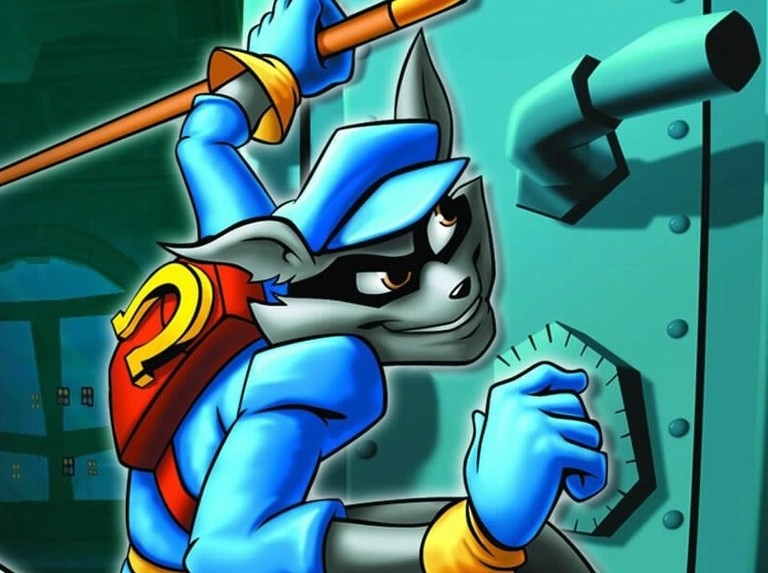
To be fair, we ARE good at it...

As I’ve thought about this, I’ve started to wonder what other animal stereotypes there are in anthropomorphic animal media and why they exist. I’m less curious about why they exist from a mechanical narrative perspective, as we’ve already talked about how many writers present animal characters in ways to make them as easily identifiable as possible. What I’m more curious about is what ‘inspires’ these stereotypes. I’ve long ago had to accept that having a built-in bandit mask and gloves does NOT help the characters in the raccoon population nab the role in the story of ‘honest hard-working citizen’.

Bah, playing the scoundrel is way more fun anyways…

Anywho, here are some major examples of these stereotypes that I’ve come to see in literature.


Weasels: The granddaddy of them all is right here. It’s even in our language to call somebody a weasel when they lie, cheat, and steal. They get bonus points if they also have a nasally laugh and shifty eyes. They also tend not to be the lead villains in the story and more often the lackey. One of the clearest examples I’ve seen of this is in Who Framed Roger Rabbit? where there’s a gang of weasels that really just epitomize the stereotype. Of course, that’s done for laughs and on purpose. In literature, it’s still pretty common to have untrustworthy weasels. Redwall is especially guilty of this, though it uses stoats and ferrets more than weasels. Every member of the weasel family in a Redwall book is untrustworthy, cruel, and generally the villain’s cannon fodder. Speaking of our favorite abbey…


Mice: I’ll admit that I’ve no solid idea how mice got to become such renowned heroes in anthropomorphic literature. I’ve heard many theories that seem sensible: Mice are analogues to the weak peasants and common men and women who sought to rise above the comparably massive and oppressive tyrants and nobility in their kingdoms. Mice are capable of living in abysmal situations and making the most of the least amount of resources imaginable. Mice and men have lived along one another for ages, both being communal species and sharing homes, food, and land, so mice have an innate connection to the everyman, who just so happens to be a favored type of hero.

The list goes on. The bottom line of it, though, is that mice perfectly embody one of the most popular types of heroic narratives: the growing hero. Many stories, especially epic fantasies, start with a protagonist who really is assumed to be nothing special by all but a select few. He’s either too small, too skinny, too fat, too young, or any number of other traits that folks just don’t think of when they think of heroes. In the animal kingdom, there are few animals so unassuming as a mouse. I think this really contributes to their role in popular fiction. As for examples, there are so many that I doubt I even need to give them. Mathias, Mrs. Frisby, Runaway Ralph, Mickey Mouse… It’s actually pretty incredible.

If you’d like to see a book that actually takes a fun look at how mice and heroes are connected, give Margery Sharp’s The Rescuers a read. It’s interesting how much sense it makes.


Bears: If mice are bold and heroic and weasels are evil and corrupt, then bears are our nice middle ground of being slow and relatively simple-minded. There aren’t too many bear heroes in literature, but there also aren’t too many bear villains. There are quite a few bear bystanders, though! The interesting stereotype of bear characters is that they often end up in the way while in pursuit of their simple goals. These goals usually involve food, such as in the case of Winnie the Pooh, but they can also involve just having a place to sleep. The reasons for authors depicting bears in this fashion are pretty clear, as bears are known for being massive, hungry, and hibernating during the winter, which surely must have terrified many an early explorer looking for comfort in a warm cave. There a number of books in children’s literature that depict bear characters lumbering about and trying to find a good place to sleep, only to be interrupted for one reason or another. Sometimes this results in the bear becoming something of a monster and attacking the heroes, but usually it just ends with the bear being denied whatever he wants at the time and lumbering off elsewhere to find it. While I did mention Winnie the Pooh, the character in literature that I feel best embodies this stereotype is the bear in C.S. Lewis’ The Last Battle. He’s described as a good and heroic character, but even the other heroes describe him constantly with one word: Simple.


Owls: The last on our list for now fits the bill for the missing key narrative role we’ve not yet touched on today: the wise old man. Owls and wisdom have been related since all the way back in Greek Mythology, if not even earlier. I’ve read that the reasons for this are related to both their nature and their appearance. Nature-wise, owls are fascinating hunters because of their uncanny perception. In the dead of night, an owl can sense a 3cm. long mouse running underneath thick foliage 20 feet below its perch. They can then make their kill silently and quickly, without any useless movements. Visually, an owl’s eyes are massive and they’re known for being able to move their heads to see in all directions. In short, owls are known for being all-seeing. Couple that with the fact that mankind has long had a fascination with winged creatures and associated them with spirits, and you have the perfect animal for a sage. The owl from Mrs. Frisby and the Rats of NIMH is the first one that comes to my mind, but even the owls in Silverwing fit this theme, being around since seemingly the dawn of time and having a commanding knowledge of the law, despite it perhaps being unjust. The times in stories when mice are paired with owls in this role tend to especially amuse me, as the mouse understandably seems amazed to not be eaten. Of course, there are a number of mouse stories where owls DO terrorize our heroic rodents.


There are many more, of course, and just because they’re stereotypes does not mean the characters are poorly written as much as they are somewhat traditional. If any readers here have animal stereotypes that you’ve noticed, list your favorites! It can be pretty fun to break down some of the core concepts of our favorite genre sometimes.

What? I'm just following instructions!


Until next time, happy reading, all!

-Chammy

Currently Reading:
The Unlikely Ones by Mary Brown

Monday, September 22, 2014

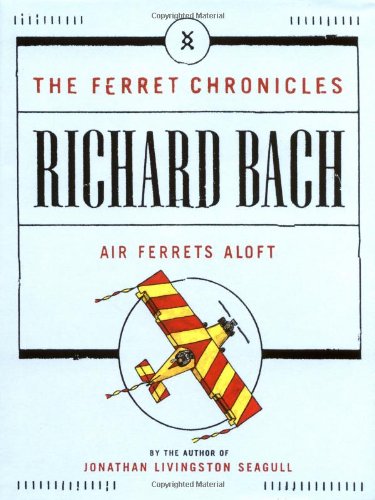
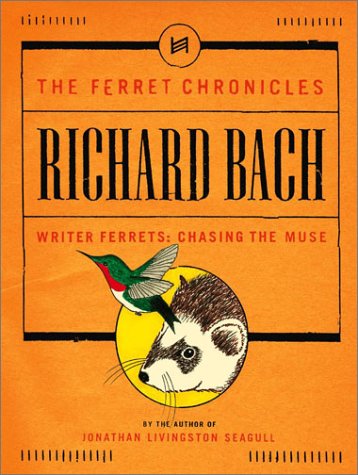
BOOK TALK: Air Ferrets Aloft/Writer Ferrets: Chasing the Muse


I believe I have just gotten back from having quite an adventure.

As I was looking through my list of books to read for this blog, and honestly for my own enjoyment, I rather randomly chose one called Air Ferrets Aloft. I didn’t know a thing about it aside from the premise that it was about a flying company owned and run by ferrets. It sounded straight-forward enough.


Upon first getting the book and starting it up, several thoughts came quickly to my mind:

1.)    Whoa… Look at the huge spaces between paragraphs! I hope this isn’t TOO young a book for me to be reading.
2.)    Ugh… Every character in this book is a ferret and every character has the last name of Ferret! I’m going to guess they’re not related, elsewise this little romance they’re insinuating would be very wrong.
3.)    Neat. This book has illustrations! … Why is that ferret cross-eyed?

To be fair, this illustration wasn't bad so much as it took me by surprise.
The art DOES improve as the books go on, though, by leaps and bounds.

And it went downhill from there for a short while. The story seemed nonsensical and very childish, a little too happy-go-lucky, and I kept wanting to turn my nose up at it. Looking back now, I actually feel rather petty, thinking as I did when starting this up. After all, hundreds of books are written in this fashion and are perfectly fine for their audience.

But forget that entire line of thinking because, several chapters in, I quickly discovered that this was NOT like anything I was expecting.

To start with, the book introduced something extremely strange and out of left-field called Angel Ferret Fairies. Essentially, they’re a community of angels that watch over ferrets and give them suggestions here and there. To put it simply, they’re guardian angels in ferret form. Several chapters in, we’re introduced to these angels by way of them having a meeting inside of a ferret-shaped cloud. There they flew, each of them hovering in golden helicopters, while they discussed wordly matters and stuff involving airplanes and the ferrets who flew them and used to be related to some of them.

Already, my mind was starting to take notice of something being different here. Not only were we introduced to an entire anthropomorphic ferret society in this book that seems to run parallel with our human society, but we were also introduced to the society of their angels. We get to look and see the mundane day-to-day life of guardian angels, and they actually make up the primary focus of the book! So now we’ve flown past a possibly predictable story about a ferret having flying adventures with her plane and instead changed to a story focusing on metaphysical concepts of her world.

This is only part of where the story started to catch my attention. What caught my attention next was the character of Stormy Ferret.

We’re introduced to her in an extremely casual way that shows she knows how to fly a plane and that she does it well, with mention that she got her name because she’s ridden through some extremely rough weather and come out fine. What I didn’t expect to see was her showing us just how tough she was and basically emasculating me over the course of several chapters. She doesn’t just ride through rough weather here; she absolutely skirts death and smiles! We see her engines explode, her auto-pilot fail, her wings bathed in constantly crackling sheets of ice, and her calmly going through a checklist of things that would lead to her crashing and eventual death. With the story focusing so much on angels up to this point, I was honestly expecting her to die in a horrible, flaming crash, and we’d get to see her be one of our new angel protagonists.

Luckily, Stormy survives, beating even the angels’ best attempts to ground her. That’s right. Stormy was so awesome that angels couldn’t even stop her from flying. Of course, they were attempting to do so in order to start a romance that would supposedly lead to great things for ferretkind in the future, so Stormy kind of seems to screw over the plans of Heaven through her stubbornness. Not sure if that makes her our protagonist or not… Regardless, fate works in mysterious ways and all that and she DOES meet the ferret she’s supposed to run into and fall in love with.

The romance in this book is dealt with in a strangely mature fashion. The characters are shown meeting and exchanging pleasantries and memories and really engaging in good conversation that sounds honest and true. Romance hardly feels forced as you hear these two talk and reveal their character flaws, weird habits, and childish memories. And they don’t end the story in marriage! They’re courting throughout the book in a genuine fashion. In fact, the height of their romance happens at about 3/5 of the way through the book. The remainder is spent on the angel ferrets and how they’re still interacting with the land of the living, including a heart-wrenching look at a grandfather who’s comforting his mourning granddaughter after his death and going to the ‘angel store’ to buy a gift for her: The ability to see what already exists. Considering she’s just above being a toddler, this leads to an adorable scene where she’s happy again and gets to catch a glimpse of her grandfather while her befuddled parents look on.

The book was written with so much honesty and good will that it was astonishing. I can’t remember the last time a book made me feel this positive. So often, I see books tied up in ‘realistic endings’, which translates to people having to live with unhappiness and the problems of the world. It’s exceedingly rare that I get to see a book that gives a happy realistic ending, where things aren’t perfect or tied up with a bow, but you get a true feeling that everything will be all right and that there’s a real point to reaching for your dreams.

This book did kind of lose me with one thing, though… And that’s the author’s clear knowledge of all things aeronautical. I read more authentic airplane radio-speak in this book than I’ve ever cared to read in my life. There are literally pages of ferrets talking to one another over the radio and describing how many ‘thousand paws’ in the air they were in relation to various other things as they navigated. I can’t tell if the author just did an incredible amount of research into the field or if he was a professional pilot himself, but I never once doubted the veracity of his measurements. The scariest thing was that I feel like I started to almost understand it by the end of the book, and I know absolutely nothing about how to fly a plane.

It was that thought, though, that made me crazy about this author. I believed so much of what he said and wanted to really get behind the feel-good feelings he was sharing with us in this book. His dedication to his research also astounded me, as his language for flying felt ridiculously authentic, and I just had to know more. I was too curious… Who IS Richard Bach?

Nana nana nana nana Bach-MAN!


And NO, he’s not that guy.

This was why I checked out Writer Ferrets immediately afterwards, and boy was I not disappointed.


I’m not going to go on for pages about the book, but I will highly recommend it to any writer who wants to love his craft again.  It’s a glorious story about a ferret novelist and his wife and how the two rekindle the joys of writing and accomplish the Writer’s Dream, but never lose sight of what they love about the art itself. In fact, they bring up possibly ceasing their writing altogether if they no longer have a reason and a love to write.

It’s so very real and so very heavy, dealing with publishing, rejection, jealousy over other accomplished writers, and the demons writers can have that hold them back like a great fire-breathing dragon trying to hoard and hide your soul. Yet it also deals with success and the truly wonderful feeling of making a good story that touches others, and just how important stories can be to so many people. There were several moments that hit so close to home that they honestly made me tear up.

After reading Writer Ferrets, I was able to determine more about Richard Bach’s writing. First, the guy DOES love airplanes. He stuck several of them into the story and briefly tried to teach the main character how to fly one. Second, he does his research and does it well. Yeah, it may be because he’s written about airplanes before that he’s able to write so authentically about airplanes in one book and the life of a writer in the next, but this book felt like it was written for writers just as Air Ferrets Aloft felt like it was written for pilots. By the end, this felt like a book that had become a part of me, and I will proudly display this on my shelf.

I would strongly suggest folks to check this author out and to seek out a title of his that seems to pertain to an interest of yours. He’s written a number of different books such as The Ferret Chronicles series as well as a the acclaimed Jonathan Livingston Seagull , so I’m certain you’ll find one that touches somewhere close to you. If not, at least read Writer Ferrets and get a good smile out of it, as that book is written for book-lovers almost as much as it’s written for book writers.

So, yeah, this talk was more about writing than it was about Anthropomorphics in fiction, but it certainly isn’t time wasted! This is a shining example of how books in this field of literature can endlessly surprise you.

Take care, all, and happy reading!

-Chammy

Wednesday, September 17, 2014

Gen-Con Round-Up

Remember when I mentioned I’d take some time to show off the various artists and authors I ran into while at Gen-Con? Well, wait no further! That time is now!

Before I start listing folks, let me just say that they were all fantastic and very friendly and professional people. Everyone was extremely eager to show me their work and their passion for their craft and they’re all deserving of at least a look. I bought prints from a couple artists, but I mostly just talked with them and browsed their work. As mentioned before, I didn’t pick up many books on my trip there, and I do sorely regret it! However, one of my friends did get plenty, so I hope to borrow some of his copies or even just pick up some of my own so that I can give the various independent authors the very thing we all crave: an audience.

Because of the sheer number of different folks, I won’t be giving much of a blurb about every single one. I’ll also try not to go TOO crazy with a long image-heavy list. I’ll try to keep this simple and easy to browse, but also hopefully fun to look at.

So, without further ado:


Authors:

Gabrielle Harbowy: http://gabrielle-edits.com/


Chris A. Jackson: http://www.jaxbooks.com


Illustrators:


Bought an epic print of some cats cosplaying as Final Fantasy mages from this fellow. It’s sadly not on his website and too big to scan, but it’s really awesome. Trust me!


Diana Harlan Stein: http://www.naiadstudios.com/


Got a commission from this artist. Turned out rather lovely, don’t ya think?

(Not an author or illustrator, but still a very awesome company that was at GenCon)

The Baby Bestiary (already funded, but you can still follow up on it!) : https://www.kickstarter.com/projects/metalweavedesigns/the-baby-bestiary


Indy Reads Books: http://indyreadsbooks.org/


That's all for now, folks :)

(No art from yours truly this week because this post isn't about MY art ;) )

Until next time, happy reading!
-Chammy

Currently Reading:
Writer Ferrets by Richard Bach

Monday, September 8, 2014

Can Anthro Animals Work at the Zoo?

As I’ve said before, I have many passions aside from literature, and I feel they all combine to make up who I am as a person and what I like best about myself! One of the things I enjoy that I honestly don’t talk about a whole lot is anime or Japanese animation.

Now before some of you start running for the hills (or what passes for hills here in Indiana), this is still very much related to anthropomorphic animal stories and stories in general!

I’ve been watching a little series lately called Shirokuma Café (aka: Polar Bear’s Café). It’s a fun series about a Polar Bear named Shirokuma who runs a modest café in modern day Japan. The majority of the series is about the everyday life of Shirokuma, which is also the Japanese word for Polar Bear, and the visitors to his café. Many of them are other animals, like Anteater, Llama, and Penguin, but there are also many humans who attend the café. It is, after all, in modern day Japan.

One of the more humorous aspects to me in the show is how the animals lead everyday lives in human society, and the lines are so wonderfully blurred between humans treating them like people and treating them like animals. Folks see a bear enter into a convenience store to buy some balsamic vinegar while talking on his smart phone and they think nothing of it. Yet, in the same day, children will go to the zoo and see the same bear there and cheer about how cute it is as it rolls around in a tire swing.

The very fact that zoos exist in this kind of world is strangely hilarious to me, especially with how they are presented. For instance, one of the main characters in the series, Panda (try and guess what he is), is being forced to get a job by his mother. However, he has no skills at anything, no ambition, and really only considers himself to be good at eating bamboo and sleeping. Every place he interviews at, understandably, throws him right out. However, he finally lands a part-time job at the local zoo… as a panda. So now he clocks in every day with his punch card, asks his human supervisor about the finer points of his job and how to do it better, and then goes into the panda exhibit where people cheer him on for sleeping, playing around, and eating bamboo. After work, he clocks out with his coworkers at the zoo and goes to the café for an iced coffee while they talk about their day.

The everyday presentation of what really is quite a ludicrous concept just slays me, and it also makes me think about stories where anthropomorphic animals are sharing space with humans. In Shirokuma Café, animals have integrated with the human world almost seamlessly, and yet their animal natures are never forgotten. In many science-fiction stories that I’ve seen, anthro characters tend to either work completely separately from humans, or they work in positions that are socially below or above humans, such as being slaves or owning human slaves.

I always wonder why it is that many stories featuring both anthropomorphic and human characters choose to put them basically in opposition to one another in society. Even in Treasure Planet, which I rather enjoyed, humans and Kzin were treated as being very alien to one another, even with two members of the species being best friends.

Of course, when it comes to crafting a story, it’s true that conflict creates interest in most readers, and racial conflicts resonate easily with most people. While I think this is a large reason why humans and animals are socially forced apart in so many stories, it certainly would be refreshing to see more cases where they’re treated pretty much as equals in society, and yet still very different creatures.

What do others think? Does anybody have any recommendations of stories that DO feature a bit more even ground between humans and others? If so, I’d love to see them and give them a read!

This is my other part time job... I guess it's sort of like a zoo.


Until next time, happy reading, all!

-Chammy

Currently Reading:
Air Ferrets Aloft by Richard Bach

Monday, September 1, 2014

We're all Mice Here!

          One of the biggest complaints I’ve heard about a number of anthropomorphic animal stories is that the animals are ‘not animal enough.’ It’s more a complaint about possible laziness than anything else, but it’s a valid one. There are a surprising number of animal stories out there where one could replace the animals with human beings and the story would almost be identical.

            Think of something as celebrated as the Redwall series. Aside from the size differences presented, there’s no real difference between the mice, shrews, or even the badgers. Sure, badgers are presented as more fierce overall and prone to bloodlust in battle, but their diets are the same and their individual animal characteristics aren’t often used, if at all. I rarely remember a mention of the mice using their claws or tails on a normal basis. In fact, the first book was a rarity in this regard, as the primary villain was a rat who used his tail as a whip.

            Now don’t get me wrong! The Redwall books still stand as pinnacles of anthro literature and are something every writer of the genre should aspire to. However, that homogenization of races is one of its weaker points. One of its stronger points, however, and a related one, is that Redwall actually HAS races.

            While the lack of ‘animal’ factor is a point of contention among fans of anthropomorphics, one habit that I feel gets overlooked too often is the lack of racial variety in animal stories.

            I think we’ve all seen it before. How often does a story take place in a city of mice, where mice are all of the sentient creatures and other animals are really just slightly smarter versions of their wild selves? I can think of quite a few Disney films that have done this, and a few books as well. One of my favorite books, Duncton Hill, is one of the primary ones that come to mind. It’s a story about a colony of moles and the trials that a particular generation of moles experiences. While it’s wonderfully written and very thought-provoking, everything that talks in the story is a mole. The characters travel across their known world, traversing through woods, fields, and even cities, and they meet no other sentient creatures. They DO come across other wild animals, however. In particular, they live in absolute fear of the hawks, who hunt them eagerly, but we never hear the hawks utter a word.

            Mrs. Frisby and the Rats of NIMH is another wonderful story that falls into this category. Yes, the story involves rats and mice, but the only difference discussed between them is their size. Even though shrews show up as well, they aren’t presented any differently from the rats and mice. The only characters that break the mold in the story are Jeremy the crow and the Great Owl, but they’re only two individuals compared to entire races that are shown to be sentient. The farmer’s cat, Dragon, is never shown to have any conversational abilities, and the humans in the story can be understood by the animals, but not the other way around.

            This problem of why certain races can communicate with one another and other races cannot creates quite a logical disconnect, I think. It’s something, in these stories, that is just never explained, and I think it’s best illustrated by these animal worlds that we’re given which house only one kind of animal rather than many. If the animals are all sentient, why aren’t mice, bears, and raccoons all living together and solving problems together? If they can all communicate, why do they have to be so separate? And if they cannot all communicate, why does that difference exist? Is it a sign of writers humanizing animals to replicate the problem we have of communicating with different animal races, or is it a case of writers just replacing humans with mice or another single race of beasts in a story for whatever reason?

            Do you readers think this is a problem, or is it something that I’m simply thinking too deeply about when I should really just let my suspension of disbelief carry me through?

See? There's totally more than just me here! And... uh... she's kidding?

            As a side note about this, another one of my favorite books, The Sands of Time by Michael Hoeye, lampshades this concept wonderfully. It’s part of a series of books that takes place in a world of mice (and one or two squirrels), or so we thought at the time. In this book, the concept of cats are brought up for the first time. The mice of the world react with horror and disbelief, claiming that all the history talking about these cats being in the world has been falsely written, while their own history of mice accomplishing everything important in the world is unquestionably true. No one even publically believes that this other race of beings ever existed. It’s a great look at the concepts of social history and belief while also being a fun read in general. Give it a look if this topic interests you!

            Until next time, happy reading, all!
            -Chammy

Currently reading:

Air Ferrets Aloft by Richard Bach

Sunday, August 24, 2014

What's in a Name?

I’ve recently returned from Gen-Con 2014, and goodness was it an awesome trip!  Great new games to try, tons of new people to meet, and quite a few very cool costumes to gawk at! There were even some things that fit the theme of this blog, with a few independent authors selling comics and books that had some anthropomorphic element to them. The majority of it consisted of retellings of fairy tales, however, and didn’t have quite as much animal representation as I would have liked, but we’ll see if we can get one of them up here on this blog! After all, just because we’re focused on anthropomorphic literature here, that doesn’t mean there’s not a ton of great reading out there otherwise!

I collected a lot of author and artist cards over the weekend, and I’ll try to make a full listing of some of my favorites at a later date.


Over that weekend, a very good point was brought up to me by a good friend of mine that I felt was relevant here. We were seeing a good deal of Rocket Raccoon memorabilia on display at the convention and he asked me: “Why do so many animal characters just have their animal as their last name? We don’t have comic book characters that are called ‘Steve Human’, so why is something like ‘Bugs Bunny’ okay?”

This isn’t the first time such a question has graced my mind, but I’d never been asked it directly before. It bears a little bit of thinking…

We have a ton of anthropomorphic animal characters who go by their animal type for their last name: Bullwinkle T. Moose, Mickey Mouse, Roger Rabbit, Sonic the Hedgehog, Daffy Duck, Michael J. Fox (Okay, fine, he doesn’t count…), the list goes on.

Why do we do this so often and why is it acceptable?

Well, first and foremost, the majority of these characters tend to only go by their first name. It’s extremely rare for Sonic to be greeted as anything other than ‘Sonic’ by all but strangers and enemies. And in those cases, rather than using his full name, they tend to just call him ‘hedgehog’. Even though that’s a part of his character name, it’s also something he is majorly identified as. In a way, it’s not unlike in the olden days when using a last name was something reserved for those with noble or socially important families. You would have names like “James the Younger”, “Farmer Joseph”, “Lancelot the Brave”, and “George of Elizabethtown”. Names used like these were meant to convey things about the person so that you knew what to expect before you met them. For instance, if you were told you were going to do business with a man named ‘Blacksmith John’, you could make a reasonable assumption of what kind of business you’d be doing.

I think, when it comes to the animal character names, the creators are going for a similar idea. When your primary targets are younger audiences that can have very specific likes and dislikes, making things simpler for them to separate can be very handy and even win you viewers/readers that would have otherwise never looked your way. I’m certainly guilty of taking immediate notice of Rocket Raccoon when I was younger due to the name alone. If I’d only been told he was some little fellow named Rocket who’s good at shooting stuff, I might have just written it off.

Another thing such a naming convention does is, frankly, help your readers out. After all, if we hadn’t been told that Sonic was a hedgehog, would we just naturally assume that’s what he was? Scratch that, if we hadn’t been told that one of the other characters in his series had the surname ‘Echidna’, would we have even thought to consider that as a possibility? As artistic styles vary wildly and many artists keep trying to make their characters look unique and different from other popular figures, it can be tough to discern what exactly this or that non-human character is. Even in literature, giving a character the name ‘Mole’, brings to mind an immediate image, with no need to remind the readers what the character looks like on a base level and having the freedom from that point to focus on what he DOES instead.

Of course, I won’t deny that many folks do this naming convention out of laziness too. Last names can be tough to create, especially if you don’t want them to sound strange or contrived, and with animal surnames being so widely accepted, it can be easy to do that as a default. Then again, some just stick to having characters with only one name or even NO first name at all. Mrs. Frisby certainly didn’t seem to mind…

What do you readers think? Do you think the concept of animal surnames should be on its way out, or is there still a place for it in modern tales?

Wearing a name badge is sort of like having an animal surname...


Until next time, happy reading!

-Chammy

Currently Reading:
Air Ferrets Aloft by Richard Bach

Wednesday, August 13, 2014

BOOK TALK: Silverwing


I didn’t really want to do a ‘book review’ of Kenneth Oppel’s ‘Silverwing’, and not because the book isn’t deserving of one! Rather, it’s because this book has been around since 1997, had an animated series, and generally is considered a ‘classic’ by some. I feel like I would contribute nothing by reviewing this book because it really is excellently written and I feel it deserves to be called a ‘classic’ with so many other anthropomorphic stories such as ‘The Wind in the Willows’ and ‘Mrs. Frisby and the Rats of NIMH’.

So, if you want a review from me on the book, here it is:

This book is awesome and you should add it to your literary collection immediately.


What I DO want to do, however, is talk about this book and some of the thoughts I had while reading it. If anyone here has also read it, don’t be afraid to contribute your own thoughts or your opinion on my interpretations. Discussion is what makes a novel strong!

‘Silverwing’ was a very strange book to me. I had never heard of it aside from brief mentions of the cartoon, so when a good friend of mine suggested I read this book, I at first thought he might be talking about some kind of comic. In retrospect, I should have been ashamed to have known so little about this.

‘Silverwing’ is a fantastic read that really makes me nostalgic for days spent at my school library, looking for my next book to read and finding a new world in every single one. The world presented to us in ‘Silverwing’ is both ours and not ours. It’s a world of bats, owls, rats, and other beasts, and they all have their own laws and legends. Once I let myself be immersed in it, everything made absolute sense and the world felt as familiar as our own. Reading the bats talking about Nocturna wasn’t at all unlike hearing devout Christians. Hearing the legends surrounding the past of their species made everything feel so authentic and logical that it was almost scary. By the end of the book, I began to wonder what sort of laws and thoughts the squirrel munching on peanuts in my front yard would have, and I feel like that was partially the goal of this book: to get us to think differently about our world.

There are a ton of parallels between bat society and our own, which I believe is no small mistake. One of the larger themes in this story is what it means for bats to be ‘banded’. Some of the bats in the world have bands on them that we know is a form of tracking humans place on certain animals. The bats, however, have instead formed a bit of a religion around these bands. There are different theories presented throughout the book on what they mean, with the titular Silverwings believing the bands to be a sign of ‘Nocturna’s Promise’ and that the banded bats would essentially lead them to salvation. Contrary to this, the Brightwings see the bands as bad omens that lead to bats dying mysteriously and horribly. From the neutral side, our villain of the story, a massive predatory bat named Goth, believes the bands mean nothing and are just tools used by the humans as a means of enslaving their race.  All of these beliefs actually come to a head a few times in the story, and the ‘band debates’ drummed up many memories of similar religious debates that I’ve seen or had myself, and they could get just as violent and hurtful, but also just as personally affirming.

I don’t know if Oppel was specifically making a commentary on religion or not with the issue of ‘banding’ in this book, but I feel an argument could easily be made for that as at least being a theme central to the story.

However, don’t think that ‘Silverwing’ is a story with nothing to it but bands and pseudo-philosophy! There is a ton of heart in this story as well. Shade, our main character, is a great protagonist that has a lot to prove to himself and everybody around him, and his development is solid and relatable. Shade is a great character because, despite being our hero, there really isn’t a whole lot that is remarkable about him. Shade is definitely not the strongest bat. In fact, he could very well be the weakest in his entire clan. He’s not the smartest either. He’s outsmarted by villains and friends alike all throughout the story and is shown to be immature in many of his reasonings, which makes perfect sense for his age. He’s definitely not the fastest, as his friend Marina easily outpaces him and is shown to have more dexterity than him.

So what does Shade have that makes him a hero?

Shade learns.

In a setup that really makes for a more interesting protagonist than most I’ve seen, we learn early on that the only thing that Shade is good at is asking questions and being curious. In fact, he nearly brings death upon his entire clan because he was curious about seeing the sun for himself. Shade isn’t like most plucky ‘rebel’ protagonists that break from the boring and Orwellian norm in order to actually think like modern thinking people do. He actually asks good questions in situations that most would be too scared to do so. Asking your village elder about the origin of a belief when all the other elders have been shown to be closed off and almost violent at being challenged. Asking about why a law is the way it is when it clearly keeps everybody safe and isn’t hurting anybody, but the origins of it sound unfair and strange. Asking about evolutionary relations to a species that just tortured and tried to kill him nearly as a whole. Shade never stops himself from asking questions that are unpopular and even sensibly socially unacceptable.

And what makes him extra interesting is that Shade listens. Shade will ask questions about so many things, and the answers will actually matter to him, even if they’re answers that he’s uncomfortable with and doesn’t want to hear. He’s not somebody who’s looking to argue; he’s somebody who is looking to learn. THAT is what makes Shade an incredible hero, and I feel that’s also what the central point of the book is:

Don’t be afraid to learn.

Now, if you’ll excuse me, I think I’ll give this series a closer look on my own… After all, this was only the first book!

Adam West was nowhere to be found in this book.


Happy reading, all!

-Chammy