Saturday, May 28, 2016

REVIEW: Shady Hollow


Shady Hollow: A Murder Mystery by Juneau Black


ShadyHollow: A Murder Mystery by Juneau Black, is an anthropomorphic mystery novel set in the town of the same name. It’s a rather idyllic ‘Mayberry-esque’ town where serious crime is almost unheard of. In classic fashion, it lists the cast of characters we have to look forward to in the beginning of the book, as if we were preparing to settle in for a play of sorts. An interesting omission, to me, is the listing of the species for the cast. Some of their character descriptions do mention what they are, but many are left for us to fill in the gaps until we meet the character in the book itself. Luckily, Shady Hollow follows the old tradition of giving relatively animalistic names to the anthropomorphic characters. For instance, our main character is named Vera Vixen and she is, of course, a fox. Others are a little more subtle like Lenore Lee being a raven who owns the local bookstore, Nevermore Books, and the ursine chief of police being named Theodore. 

Despite the silly names and a setting that would appear to be right out of a Saturday-morning cartoon, Shady Hollow is not at all shy about jumping into the serious realm of murder and intrigue. In the very first chapter, it jumps right into the grisly murder of Otto Sumpf, a frog who is the local crotchety grump, and who is found face down in the river with a knife in his back. From there, the story fans out into exploring the lives of various townsfolk and uncovering all of their little secrets and hidden affairs (including some literal affairs). This leads to more characters than one would expect having reason to murder Otto and shake up the relative serenity of Shady Hollow. As the book goes on, it expands into the classic murder mystery format of laying out alibis and examining motives until the killer is finally revealed.

Interestingly, the book plays around with everything that it knows itself to be. Even though it’s considered to be a ‘funny animal’ book in the same vein as The Wind in the Willows, its animals never shy away from being scandalous or deadly serious, turning the typical ‘playful and happy-go-lucky’ animal stereotype on its head. Characters get drunk, have one-night stands, tell open-face lies, have broken marriages… but none of it ever goes TOO far over the line. One of the characters being a mistress is heavily implied, but never is anything sexual seen. Characters may occasionally say and do awful things to one another and can fight quite bitterly, but there is no swearing or foul language of any kind. Even the murders are written in an oddly ‘off-screen’ manner, where the murder itself is never seen and the injuries are usually physically minor and hidden from view. It’s almost odd to think that everything that we actually get to see, if it were a film, would put this book within a PG rating in terms of content, yet the mystery is treated very much like an adult affair. The motives that characters have can be heart-breaking or cruel, even venturing into the realm of a small town’s socially accepted racism or distrust of outsiders. Make no mistake: this is a work of fiction that is probably best enjoyed with an adult mindset. It’s like watching the stories of Winnie-The-Pooh unravel and reveal what happens when Rabbit finally has enough and smacks Tigger with his shovel over the rampant property destruction.

The mystery novel aspect is played around with as well, and done in a very enjoyable fashion. Early on, Vera takes on the case of Otto’s murder and determines that she needs an expert’s opinion on the matter. Rather than going to a police detective, she confides in her best friend Lenore, who specializes in reading mystery novels. The pair constantly deconstruct what should normally happen in a mystery and compare it with the situations they’re facing, including checking up on alibis and even typical suspects and false leads. While not only fun, it also helps to put the reader into the proper mindset of wanting to crack the case themselves.

With all of that praise, there are a few things that hold the book back. First, the book is a little short, giving us only about 200 pages of very fast-moving text. By the end, it feels like we’ve watched an episode or two of a television series rather than read a full-length novel. Granted, this is a minor problem, as the pace of the novel is brisk and it kept me pretty engaged throughout, but I really would have enjoyed taking some time to learn more about the world of Shady Hollow and the lives of the various characters in it. The drama of the book is a little on the low side because of this. Also, as a related problem, some of the characters are painfully one-dimensional, despite being important enough to warrant a listing in the ‘cast list’ at the beginning of the book. BW Stone, the always angry and always shouting skunk who manages the local newspaper is probably the worst offender, being little more than a skunk-based caricature of J. Jonah Jameson from Spider Man

Ya know, his hair always DID
look kind of skunk-like

Characters like these make it feel like the book is a little tonally confused, as it will try to impart the gravity of a murder and social problems at one moment and remind you that this isn’t a children’s tale, but then it tries to be a little too silly or stereotypical and avoids depth. It kind of makes me wonder if the authors are straddling the line between adult and childish writing because they themselves couldn’t decide on an audience to market this towards. Considering how anthropomorphic fiction IS usually considered to be in the realm of Teen or Children’s literature by most publishers, I could certainly understand such a problem. It also would explain the fairly low-key cover design of a fox silhouetted underneath the title and the ‘A Murder Mystery’ subtitle. A cover fully displaying the anthropomorphic cast with all their vibrant colors and personalities would give a very different feel and might sway too far towards one side or the other. It’s a shame, though, as I would have very much liked to see how the author envisioned this cast!

In the end, despite the little problems I’ve mentioned, I’d give this book a hearty recommendation for fans of mysteries, inventive stories, and anthropomorphic fiction! Not only is it a fun, quick read, but there also looks to be more on the way, if the ‘Coming Soon’ list at the front of the book is any indication. Considering how rare it is for me to see something that bridges my love for both mysteries and anthropomorphic fiction, I’m certainly hoping we’ll see the next book in this series sooner rather than later!

Stand aside, Basil of Baker Street! It's time for the Great Raccoon Detective!

Until next time,
Happy reading, all!

-Chammy


Currently reading:
The Chronicles of Flurry the Bear by J. S. Skye

Sunday, September 20, 2015

BOOK TALK: The Forges of Dawn

So, let me start by saying that I know I’ve been taking a long time on this one, and that’s for a personal reason that I’ve long known:

It’s very difficult for me to power through a novel when I’m not enjoying it.

Some might ask, “Well Chammy, why would you even bother reading a book that you don’t enjoy? Why not just drop it and read something fun?” And that would be a very fair question, but I stuck with this book for two reasons. First, this book was nominated for an Ursa Major Award, and I wanted to see what it was offering to earn it. Second, for as much as I didn’t entirely enjoy my trip into this book, I felt like it was a very important and excellent book to be reading to talk about modern anthropomorphic fiction AND I had feeling that this book was hiding something special behind its roughness.

And I was right!

Readers, The Forges of Dawn by E.M. Kinsey is a GREAT example of good anthropomorphic fiction.


From the summary on Amazon:

“FOR THERE TO BE HEROES... The traditional place for a Lyonesse, as huntress and mother, holds no appeal for young Uhuru. Her greatest wish is to be a great warrior like her father and stand as protector to her pride. Society would deny her this, but fate will not. THERE MUST FIRST BE DARKNESS... Fueled by a lust for perfection and purity, the Pale Ones have conquered most of the known world. Those who do not fit their impossible ideal for Lyondom are slowly being eradicated -- and those who desert their cause are hunted down just the same. AND TO OPPOSE THAT DARKNESS... When her pride is attacked and taken by the Pale Ones, Uhuru must take up the mantle she has always coveted, and in so doing, learn its true cost. What starts as a journey to save her family quickly becomes a mission to end her enemies' reign of terror once and for all. From the shores of the only land she has ever known to the steps of faraway empires and back again, Uhuru will face pirates, monsters, and heart-breaking loss to finally learn the greatest lesson of all: heroes are never really born. Like any weapon… HEROES MUST BE FORGED”


I’ll get to my problems with the novel itself in a little bit. The first thing I wanted to do here was talk about what’s good about this novel and, especially, what makes it a solid piece of anthropomorphic writing.

There will be some light spoilers here, of course, but I’m actually going to try and stay away from most of them.

The Good

To start with, The Forges of Dawn has a fantastic setting. It takes place in the land of Afriik, known by us as basically Africa. The major twist of the setting in this book is that everything really is taking place on planet Earth, but it’s sort of like an alternate timeline of what Earth would be like if humans were wiped out and the animals of the world evolved to fill our void, renaming themselves slightly in the process (Lions are called Lyons, Leopards are called ‘Pards, and so on). The idea results in a very neat blend of technology and anatomy that is both very human and yet distinctly animal, and the setting remains solid throughout the entire book.

I do get a little tired of the renamed animals in this book... Why bother changing a single letter in a name to create essentially the same word? Either make the names more unique or just call 'em what they are!


What’s even more fun about the setting is the air of mystery and magic that everything has about it. The entire world isn’t quite known or understood by the characters, so there is this wonderful feeling of discovery when they do something crazy like leave the shores of their continent and see another part of the world. To add another layer of wonder to the setting, the whole coast of Afriik is surrounded by something called ‘the Tempest’, which is a violent, wild storm that destroys anything in its path, effectively walling off the continent from the rest of the world for all but the bravest… or the stupidest.

Speaking of magic, there IS magic in this world, and it’s handled very well! Magic is very strange and wild and known by only a few and understood by even fewer. When you see magic being used in The Forges of Dawn, you know that you’re in for something crazy, and usually something violent. When one of the magics used is known as ‘blood magic’, you can’t really get away from that. It’s one of the few recent fantasy books that I’ve read that still has a very real reverence for magic and treats it like something very powerful and yet also very dangerous to everyone involved.

Also, as a personal thing I really enjoyed, the character of Tarute is absolutely awesome. I don’t want to spoil too much about him or his development, but he is one of the coolest and most sympathetic characters in the book. The scenes involving him show a fantastic example of dialogue and conveyed emotions without words, and he’s really just a good character overall.

This isn't art from the book, but it IS art of some of the characters.
Despite being in a four-legged world, there are still mounted beasts, which is neat!
Original art is here.

The Anthro

This is really the book’s strongest feature. It conveys its world and setting excellently, and that includes the anthropomorphic qualities of the animals it presents to us. Not once did I ever forget that these characters were animals. Every action they took was explained in a fashion that made it immediately clear of what kind of creature they were, but it wasn’t overbearing about it. Characters are constantly referred to as using their ‘paws’ or pointing things out with their toes. Claws are the primary tool in this world, and they are used constantly and logically, and the body language of the animals is always mixed in with their relatively human dialogue and concepts. Lyons are often butting heads to show affection, grooming is done with the tongue, and even the clothing worn is specifically said to adorn manes or powerful shoulders. Furniture is always designed to suit characters who are mostly walking and ‘sitting’ on all fours, and even weapons are designed to augment the claws rather than be a generic replacement like a gun or a sword. It’s fantastic!

I can’t think of the last time I read a book that was exclusively about animals characters and yet never let go of their inherent ‘wildness’. It really did feel like a story about intelligent animals that have taken the place of  humans rather than humans in fur clothing, and you can’t often say that about modern anthropomorphic fiction. For that reason alone, I think that this book is a must read for fans of the genre.

It also doesn’t shirk from the elements that make anthropomorphic fiction still about what it means to be truly human. There’s very nicely presented issues of racism, class warfare, fear of the unknown, and the ‘coming of age’ concept that colors the majority of this book.


And The Ug… er… The Bad

I don’t want to dwell on negativity too much, as that’s just not the point of this blog, but I just have to talk about this. I really, really struggled with enjoying this book for most of my reading.

And that’s because the main character was one of the most frustrating that I’ve ever read.

Uhuru is such a very strange character to have as a protagonist simply because I truly believe that she was designed to be unlikable. She starts off the novel being stubborn, rude, bratty, short-tempered, thoughtless, and basically foolish. She’s constantly making mistakes that have greater consequences than she understands, and she mainly succeeds through sheer luck and good fortune. It’s so unbelievably frustrating to watch a character do something horribly stupid, like walk alone into the heart of the lair of an enemy that decimates her entire tribe, including every warrior in that tribe who has proven to be more skilled, faster, and smarter than her, and then not understand the gravity of the situation when she ultimately fails. She has so little fear of truly dire situations that it’s just strange… We’re shown how inexperienced she is with the ways of the world and with real combat and danger, and yet, when she finds it, she has such a ‘whatever’ attitude that is not at all cautious or really even brave. Uhuru is just so darned thoughtless most of the time that it made it very hard to ever relate to her or care when she was in danger.

Now, don’t get me wrong. I understand that it’s a classic narrative arc to have a foolish and inexperienced main character that grows over time into the hero that they’re truly meant to be. Heck, that’s the ‘Coming of Age’ story in a nutshell. However, Uhuru was doubly frustrating to me in that regard because she hardly matures in her thinking at all until about the last third of the book… about 320 pages in. That was 320 pages of her being massively stubborn, childish, and thoughtless, and really just willfully ignorant about things such as the world around her.

Once she started growing, however, she did so in a very odd fashion. It almost felt like a switch was flipped that said “Okay, she’s a leader now.” Granted, it was a very good and powerful scene that caused that switch to flip, but it just felt a little cheap. This character was growing so very little in personality up to this point and all of a sudden she just declares that she is no longer a child. Personally, I just felt like it would have been a much more satisfying journey to see that happening in a more obvious and gradual style, where we see her taking little steps toward maturity rather than jumping into it all at once. Uhuru’s strength of personality by that point just felt somewhat unearned, and that made it just really hard to read until I finally got there.

Also, on a slightly different note, Vireka is an absolutely awful creature that is almost unbelievably horrid to watch and see how he abuses even those that adore and trust him. I hated him and actually didn’t often enjoy reading his sections… but I can’t deny that he was a very effective and ever-present villain that you will dearly want to see slaughtered by the hero from page one.

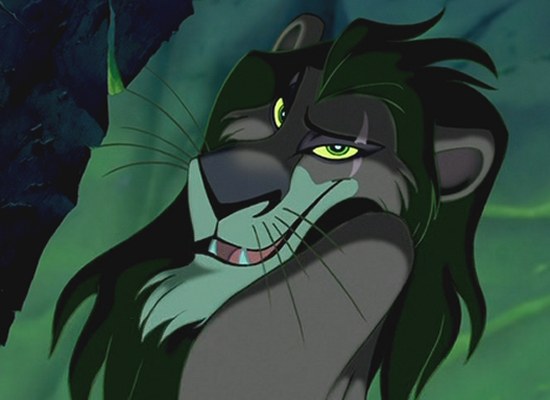
If Vireka broke out into song a little more often,
I probably would have enjoyed myself FAR more.
Take notes, future feline villains!


Final Thoughts

I’ve gone on about this novel for long enough, I think, which is fitting as I’ve spent the entire summer reading through it inch by inch.

The Forges of Dawn is a great piece of anthropomorphic fiction. It presents a fantastic setting and has some great working parts that make it memorable and help it stand out from the crowd. While reading, I made a lot of mental comparisons to Disney’s The Lion King, but I think that’s more because it’s kind of hard to get away from that when the majority of your characters are lions on the savannah. There’s some clear inspiration there with how the characters are designed (and I challenge you to not think of Scar whenever Vireka’s on the page), but I can safely say that The Forges of Dawn is its own beast entirely. I’ve never read anything like it before. I may not have personally enjoyed the protagonist, and the surprising bleakness of the world isn’t completely my cup of tea either, but I can’t deny the solid form of the writing itself. Also, the ending sequence to the book is downright incredible, so if you make the journey through the story, just know that you’ve got an awesome final act to look forward to.

Until next time, happy reading all!

-Chammy


Currently reading:

Animal Land by Margaret Blount